This page contains affiliate links: as an Amazon Associate we earn from qualifying purchases, at no extra cost to you.
Napoleon Cake

By Yulia
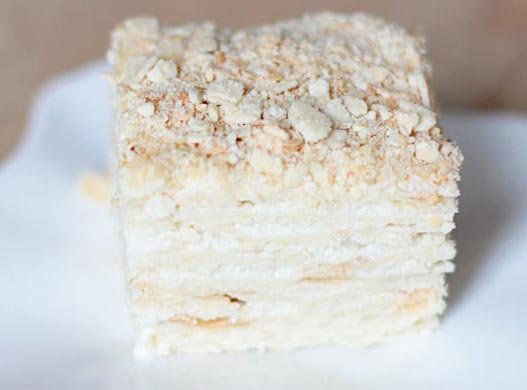
This Napoleon recipe came from my mom 🙂 She baked it for holidays, and every guest who tried it loved it. Napoleon is such a delicious cake. Its only drawback is how long it takes to bake all the layers.
Napoleon Recipe
For the Dough
- 1 cup plus 2 tablespoons (250 g) butter
- 3⅛ cups flour (3 glasses, 250 ml each)
- ½ cup (½ glass, 125 ml) warm, unboiled water, 86–95°F (30–35°C)
- 2 teaspoons vinegar (1 dessertspoon)
- A pinch of salt
For the Filling
- 2⅛ cups (0.5 L) milk
- 3 tablespoons starch
- 1⅝ cups sugar (1½ glasses, 375 ml)
- ⅞–1⅓ cups (200–300 g) butter
Sift the flour, make a well, and coarsely grate the butter into it.
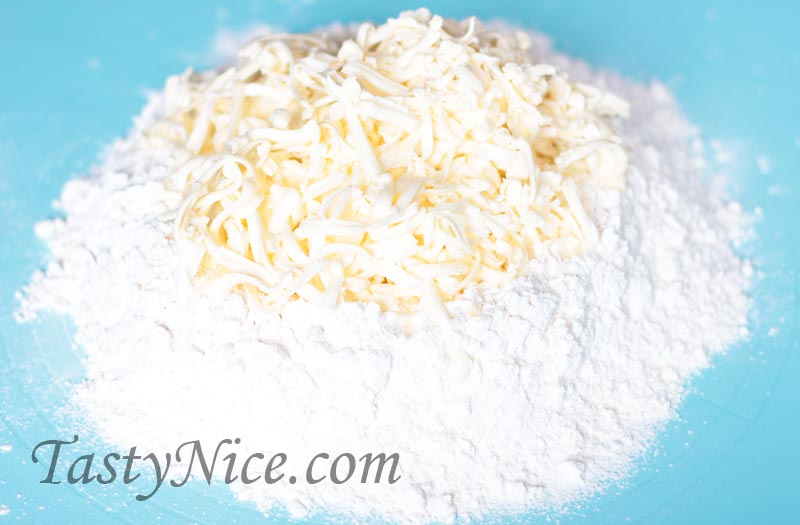
Rub the butter into the flour to make crumbs. Make another well.
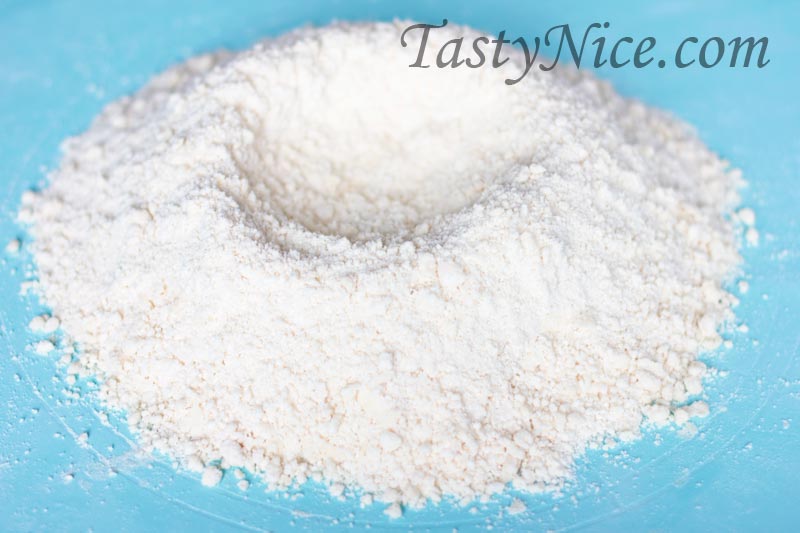
Dissolve a pinch of salt in the water and add the vinegar. Pour the water into the well little by little, working it into the dough. You might have some left over. Just discard the extra, as we don’t want a wet dough. If you need more water, add plain water without salt or vinegar.
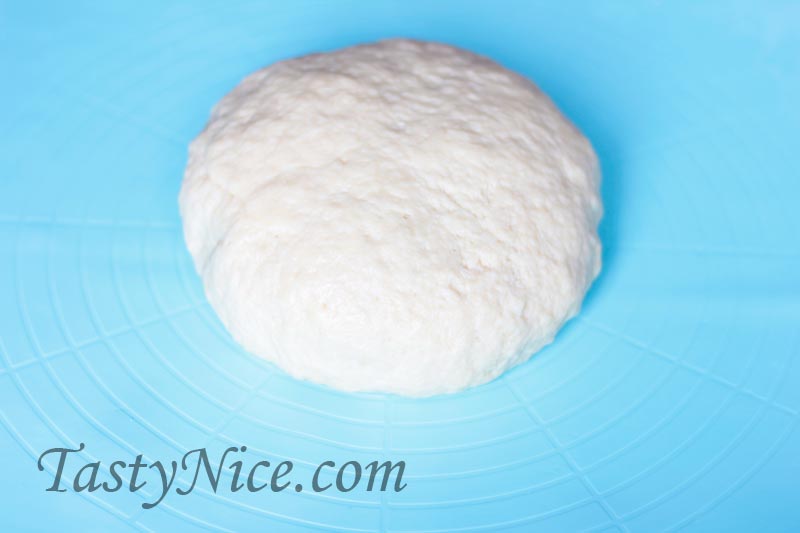
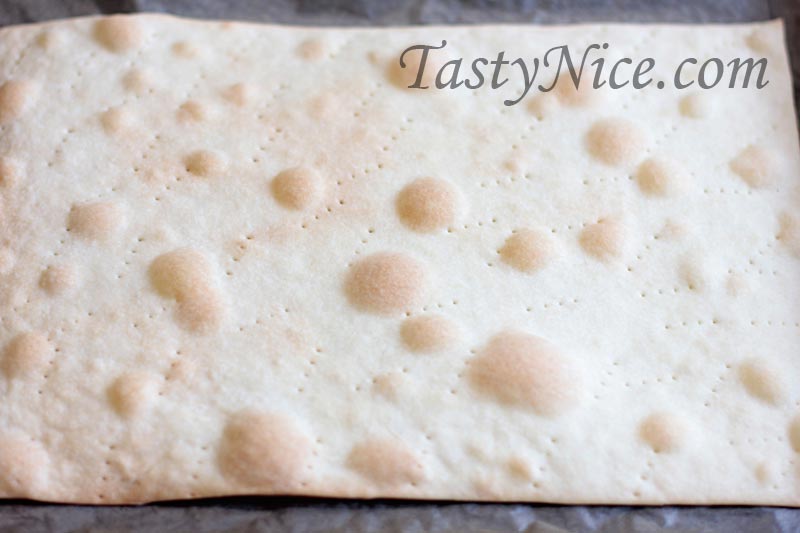
Refrigerate the dough for 1 hour. Divide it into 8–10 equal pieces, depending on the size of your cake, and roll each one about 1/32–1/16 inch (1–2 mm) thick. You can trim the edges now for a neat cake. Be sure to prick the dough with a fork because it puffs up into lots of layers as it bakes.
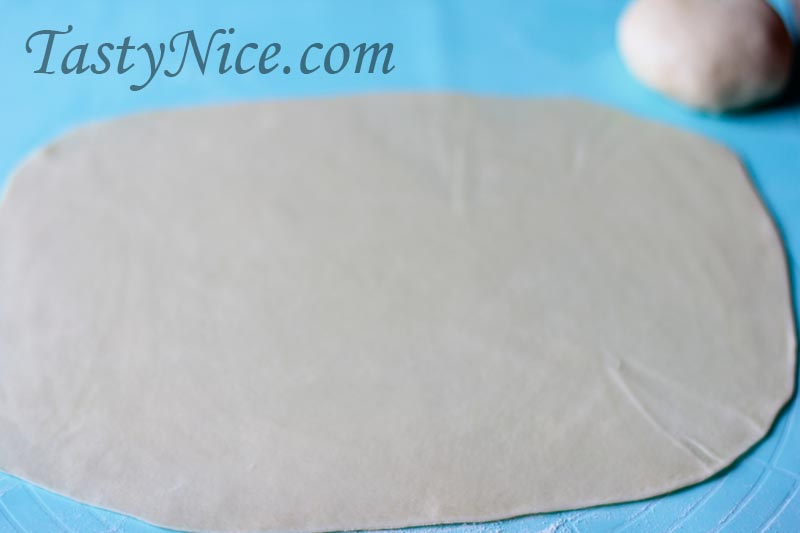
Bake in an oven preheated to 425–475°F (220–250°C) for 5–7 minutes, until lightly browned. Bake all the layers this way.
Unfortunately, I don’t have photos of making the filling or spreading it on the cake. Set aside ½ cup (½ glass, 125 ml) of the milk and put the rest on the stove. Stir the starch into the reserved milk. Once the milk on the stove boils, pour in the starch mixture in a thin stream, stirring constantly to keep lumps from forming. Keep stirring until it thickens, then take it off the heat. You should have a stretchy milk pudding (kissel). Leave it to cool.
Now let’s make the other part of the filling. Beat the room-temperature butter with the sugar until the sugar breaks down, about 10 minutes. If it still feels a little grainy between your teeth, that’s fine. It’ll dissolve once we add the milk pudding. Fine sugar works best for this filling. Once the pudding has cooled completely (this is very important, or the butter will melt and the filling will run), gradually combine the two. Add a spoonful of pudding to the whipped butter and whisk by hand, without a mixer until smooth so the filling won’t separate. Add another spoonful and stir. Keep going until it’s all mixed in.
Let’s fill the layers. Set one aside for crumbs. Divide the filling by eye among the remaining layers and assemble the Napoleon. Spread filling evenly on the first layer, lay the second on top, and press down lightly. Keep going the same way. If a layer cracks or even breaks apart, don’t worry. That’s perfectly normal for a Napoleon. Just fit the pieces together on the cake and carry on. Spread filling over the top and sides. Crush the reserved layer and sprinkle the crumbs over the top and sides.
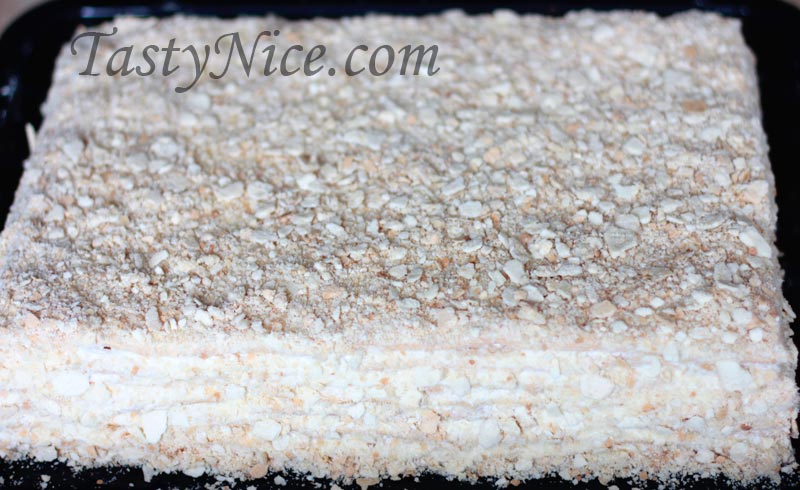
Refrigerate the cake for 5–6 hours, or better yet overnight, so the layers can soften.
And there we are, our Napoleon cake is ready!
Enjoy it with a cup of tea!
What I use for this step